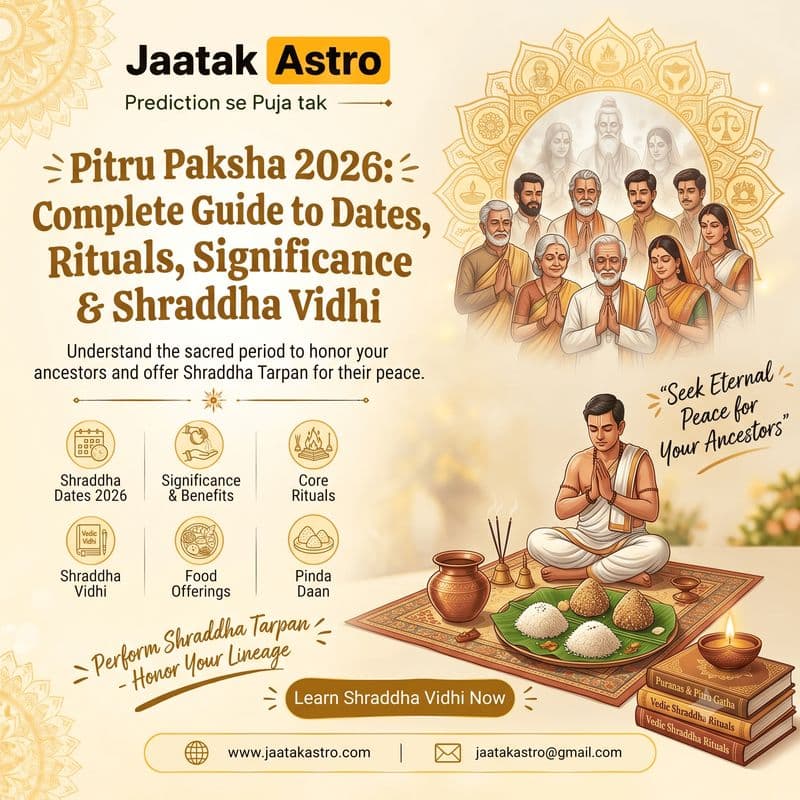
Pitru Paksha 2026: Dates, Rituals, Significance, and Everything You Need to Know
Every autumn, as the monsoons recede and the air begins to carry the crisp coolness of approaching festivities, the Vedic calendar calls for a pause. Before the grand lights and joyous celebrations of Navratri, Durga Puja, and Diwali fill our homes, we turn our gaze backward.
We look toward the people who held our hands, built our foundations, and passed down the lineage that courses through our veins: our ancestors (Pitrus).
This sacred 16-day lunar window is known as Pitru Paksha (also referred to as Shradh Paksha or Mahalaya Paksha). It is not an occasion of sorrow or gloom; rather, it is a fortnight of heartfelt remembrance, gratitude, karmic balance, and spiritual liberation.
Whether you are performing Shradh rituals for the first time, seeking clarity on the exact 2026 dates, or wondering how modern city dwellers can honour this profound custom, here is everything you need to know.
Quick Summary: Pitru Paksha 2026 At a Glance
Start Date (Purnima Shraddha): Saturday, September 26, 2026
Pratipada Shraddha (Official start of Krishna Paksha): Sunday, September 27, 2026
Culmination Date (Sarva Pitru Amavasya / Mahalaya): Saturday, October 10, 2026
Lunar Month: Bhadrapada Purnima to Ashwin Krishna Paksha Amavasya (Purnimanta tradition)
Most Auspicious Timing for Rituals: Kutup Muhurat and Aparahna Kaal (typically between 11:35 AM and 3:30 PM)
Pitru Paksha 2026: Complete Tithi-Wise Date Sheet
Shradh ceremonies are traditionally carried out on the specific Tithi (lunar day) upon which an ancestor passed away, regardless of the month.
If you do not know the exact lunar date, scriptures provide specific dates like Sarva Pitru Amavasya where offerings reach all departed family members.
Date (2026) | Day | Tithi / Observance | Dedicated To / Significance |
Sept 26 | Saturday | Purnima Shraddha | Ancestors who passed on a Full Moon (Purnima) |
Sept 27 | Sunday | Pratipada Shraddha | Pitru Paksha formally begins; Maternal grandfather (Nana) or 1st day tithi |
Sept 28 | Monday | Dwitiya Shraddha | Ancestors who passed on Dwitiya tithi |
Sept 29 | Tuesday | Tritiya & Chaturthi Shraddha / Maha Bharani | A highly auspicious day for special liberation offerings |
Sept 30 | Wednesday | Panchami Shraddha | For ancestors who died unmarried or in early youth |
Oct 01 | Thursday | Shashthi Shraddha | Ancestors who passed on Shashthi tithi |
Oct 02 | Friday | Saptami Shraddha | Ancestors who passed on Saptami tithi |
Oct 03 | Saturday | Ashtami Shraddha | Father or ancestors who passed on Ashtami |
Oct 04 | Sunday | Navami Shraddha (Matru Navami / Avidhava Navami) | Mothers, grandmothers, and married women who passed before their husbands |
Oct 05 | Monday | Dashami Shraddha | Ancestors who passed on Dashami tithi |
Oct 06 | Tuesday | Ekadashi Shraddha | For renunciants, ascetics (Sadhus), and spiritual seekers |
Oct 07 | Wednesday | Dwadashi & Magha Shraddha | For sanyasis, or ancestors who attained spiritual liberation |
Oct 08 | Thursday | Trayodashi Shraddha | For young children or passed souls |
Oct 09 | Friday | Chaturdashi Shraddha | Dedicated to souls who passed away through accidents, violence, sudden illnesses, or unnatural causes |
Oct 10 | Saturday | Sarva Pitru Amavasya (Mahalaya Amavasya) | The universal closing day for all ancestors, forgotten souls, and unknown forebears |
Pro Tip: Keep an eye out for October 4 (Matru Navami) and October 10 (Sarva Pitru Amavasya). Even if your schedule prevents daily observances, taking time out on these two days carries immense spiritual significance.
Why Do We Observe Pitru Paksha? The Deeper Meaning
In our rush toward modern accomplishments, it is easy to view life as entirely self-made. Vedic philosophy gently reminds us otherwise through the concept of the Three Debts (Tri-Rina):
Deva Rina: Our debt to the cosmos and natural elements.
Rishi Rina: Our debt to teachers, thinkers, and sages who gave us knowledge.
Pitru Rina: Our debt to our parents and ancestors who gave us our physical bodies, our heritage, our values, and our safety.
The Thinning of Realms
According to the Garuda Purana and Agni Purana, during the solar transit into the constellation of Virgo (Kanya Rashi), the veil between Bhu-loka (the physical world) and Pitru-loka (the ancestral sphere) thins. It is believed that souls are granted permission to revisit their descendants, longing for goodwill, sustenance, and peaceful prayer.
When descendants offer water, seeds, and love, the ancestors are believed to feel acknowledged and satisfied. Their blessings (Ashirwad) bring peace of mind, family harmony, prosperity, and spiritual progress.
Essential Rituals of Pitru Paksha Explained
The word Shradh is derived from Shraddha (श्रद्धा), meaning deep devotion, faith, and unconditional sincerity. A modest offering made with genuine devotion is far more potent than an extravagant ritual performed out of vanity or guilt.
Here are the three pillars of ancestral rituals:
1. Tarpan (The Water Offering)
Tarpan is the act of satisfying the thirst of the departed soul. Descendants mix clean water, raw cow’s milk, black sesame seeds (Kala Til), and sacred Kusha grass (Darbha).
Facing South (the direction associated with Yama and ancestral realms), water is poured between the thumb and forefinger (the Pitru Tirtha of the palm) accompanied by mantras of gratitude.
2. Pinda Daan (The Offering of Sustenance)
Pindas are spherical balls made of boiled rice, barley flour (Jau), black sesame seeds, and clarified butter (Ghee). Symbolically representing the five elements and the continuity of bodily lineage, they are offered with Vedic prayers to nourish the astral body of departed souls.
3. Panchabali (The Five Sacred Offerings)
No Shradh meal is consumed by family members until five distinct portions of food are reverently laid out for the wider creation:
Gau Bali: For the sacred Cow (representing motherly nurturing and cosmic bounty).
Kukur Bali: For Dogs (the watchful guardians of the subtle gates of Yama).
Kaka Bali: For Crows (traditionally viewed as the messengers and bridge to Pitru-loka).
Deva Bali: An offering to the universal devatas and cosmic fire.
Pipilika Bali: For tiny creatures like ants and insects (acknowledging unity in all living forms).
After these offerings, food and clothes are gifted to knowledgeable Brahmins, monks, or the less fortunate (Daan).
Sacred Muhurat Timings: When Should You Perform Shradh?
Unlike worship of the deities (Deva Puja), which takes place in the early morning (Brahma Muhurat), ancestral rites must be performed in the afternoon:
Kutup Muhurat: Roughly between 11:35 AM and 12:25 PM (considered the most potent phase).
Rohina Muhurat: Roughly between 12:25 PM and 01:15 PM.
Aparahna Kaal: Between 01:15 PM and 03:40 PM.
Note: Exact minutes vary slightly depending on your sunrise and geographical coordinates; check your local panchang or ephemeris.
Pitru Paksha: Important Dos and Don'ts
To preserve the contemplative and sacred atmosphere of this fortnight, Vedic tradition outlines specific cultural etiquette:
What to Do:
Practice Simplicity: Cultivate peaceful thoughts, gentle speech, and emotional warmth at home.
Give Freely: Generously donate food, warm clothing, water pots, umbrellas, footwear, and grains to those in need.
Feed Living Creatures: Keep bowls of clean water and bread/grain outside for stray animals, birds, and insects every morning.
Keep a Satvik Kitchen: Prepare clean, nutritious, non-irritant meals made with seasonal produce and pure ghee.
What to Avoid:
Avoid Tamasic Foods: Steer clear of meat, fish, eggs, alcohol, as well as excessively pungent ingredients like raw garlic and onions.
Postpone Major Celebrations: Avoid hosting joyous events such as weddings, housewarmings (Griha Pravesh), or buying luxury indulgences purely for vanity. The mood is meant for reflection, not conspicuous consumption.
No Harsh Words: Avoid family conflicts, disputes over property, and speaking ill of deceased relatives.
Iron Utensils: Avoid using iron vessels during Shradh offerings; opt for copper, brass, silver, or leaf plates (pattal).
Can’t Perform Full Vedic Rituals? Here is What You Can Do
Many young professionals, students, and diaspora families living abroad wonder: “I live in an apartment thousands of miles away without priests nearby. Can I still honour my ancestors?”
The answer from the scriptures is a resounding yes. The Matsya Purana explicitly states that when resources, time, or circumstances are constrained, pure intention reigns supreme:
The Southward Prayer: Stand facing the South at midday. Raise both hands skyward and speak from your heart: “O ancestors, wherever you are, please accept my humble reverence, gratitude, and remembrance. Forgive our lapses, and grant our family peace.”
Feed a Living Being: Cook a warm meal or purchase food and serve a hungry stranger, a child in need, or feed street animals. Dedicate the merit of this charity to your ancestors.
Offer Sesame & Water: Fill a simple copper tumbler with water and a pinch of black sesame seeds, and gently pour it at the base of a Peepal, Banyan, or Tulsi plant with a prayer of gratitude.
Plant a Tree: Planting a shade-giving tree (such as Neem, Peepal, or fruit-bearing trees) in memory of your forebears is a lasting, living legacy.
Frequently Asked Questions (FAQs)
Q1. Can women perform Shradh and Tarpan?
Yes. The Garuda Purana clearly establishes that if an eldest son is unavailable or absent, daughters, wives, and daughters-in-law are fully qualified to perform Tarpan and Shradh rituals for departed loved ones.
Q2. What if I do not know the exact death anniversary or tithi of my grandparents?
Perform their remembrance on Sarva Pitru Amavasya (October 10, 2026). This day is specifically sanctified for any and all souls whose dates are unrecorded, forgotten, or lost to history.
Q3. Is Pitru Paksha considered an unlucky or inauspicious time?
No. Pitru Paksha is not "inauspicious" (ashubh); it is a solemn, dedicated, and reflective period. Just as you would not throw a loud dance party in a library, you refrain from celebratory milestones during this fortnight to accord total reverence to your lineage.
Q4. What happens immediately after Pitru Paksha concludes?
The dawn after Sarva Pitru Amavasya brings the first rays of Sharad Navratri (Sunday, October 11, 2026). The cycle gracefully pivots from solemn remembrance of the past to celebratory worship of the Divine Mother and incoming vitality.
Closing Reflection
Our ancestors are not far-off mythological figures; they live within our mannerisms, our cheekbones, the cadences of our laughter, and the values we carry.
Pitru Paksha 2026 is an invitation to reconnect with your roots, heal lingering familial regrets, and say the words that perhaps were left unsaid: “Thank you for the life you gifted me. May you find eternal peace.”
